Search This Blog

Wednesday, May 5, 2010

From Inspiration to Education, Who I am as a Creator


LOUISE BOURGEOUIS
She has famously stated “My childhood has never lost its magic, it has never lost its mystery, and it has never lost its drama.”
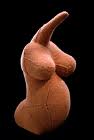


PHILIP PEARLSTEIN

"Pearlstein was among the first post-abstract artists to consistently separate representation from imposed narrative.[1] On first glance, the objects, bodies and settings in his paintings seem straightforward and realistic. Instincts lead us to assume that content is located in their subjects, and accordingly, we start looking for clues with which to decode the story. But we may be disconcerted to find that the figures refuse to meet our gaze, and that the bodies, objects and the relationships between them yield little or nothing." Peter Spooner, The Dispassionate Body: Philip Pearlstein, Paintings and Drawings of Figures in Still Life


CHUCK CLOSE
"Close's paintings attempt to close the gap between figuration and abstraction in 20th-century art. And since their legions of individually applied dots are structured by the pattern of an underlying grid, one could also say that they use the methodology of conceptual art to challenge the expressive possibilities of portraiture." New York Times GALLERY VIEW; Blurring the Lines - Dots? - Between Camera and Brush
By Andy Grundberg
Published: October 16, 1988


DAVID HOCKNEY
"I may seem to be passionately concerned with the 'hows' of representation, how you actually represent rather than 'what' or 'why'. But to me this is inevitable. The 'how' has a great effect on what we see. To say that 'what we see' is more important than 'how we see it' is to think that 'how' has been settled and fixed. When you realize this is not the case, you realize that 'how' often affects 'what' we see." David Hockney


ANDY GOLDSWORTHY

"My art is an attempt to reach beyond the surface appearance. I want to see growth in wood, time in stone, nature in a city, and I do not mean its parks but a deeper understanding that a city is nature too-the ground upon which it is built, the stone with which it is made." Andy Goldsworthy


My Work


Student Work:


Art & The Quotidian Object

Why must we now see "everything" as ART?


Is it al possible?


Questions:

If so many things are" common place" objects, how does one , as an artist, stray away from utilizing them within their works of art?


Pieter Hugo, In Tyrone Brand's Bedroom, 2007

"The imagery and strategies of still life - those arrangements of quotidian objects in a shallow domestic space - provided a particularly productive focus for exploring the way the distant affairs of the world might reach into the life of the individual. Still life is a threshold genre which focuses on what is on the table, that private/public surface which we hardly notice but on which so much of life is centered. And it is often, throughout its tradition, combined with landscape, through a window that looks out, or a shape that suggest a wider topography. Still life is, then, one of many ways the arts find to bring the distant near and to relate to the world and public events within the private life." (Bonnie Costello, in Planets on Tables: Poetry, Still Life, and the Turning World).

How can we know how much our understanding has been effected by our understanding of the objects within a certain frame?


Michael Drebert, Wood Stove, 2004. Image: helenpittgallery.org


ProstoRoz, Ljubljana

“The city must be a place of waste, for one wastes space and time: everything mustn’t be foreseen and functional… The most beautiful cities were those where festivals were not planned in advance, but there was a space where they could unfold.” (Henri Lefebvre)

Discussion Facilitator Response Art & Spirituality

After completing the second discussion facilitator , I feel that this one was more direct and successful in creating a discussion around the works of are we looked at. I don't necessarily feel that it was better because we didn't have a creative time for this one, but i feel that the questions that we posed were more direct as well as understandable.

Working through out the semester on all of these different topics with in the Art of Today book, it is really interesting how I can now see how they all fit together, overlap and intertwine. I also enjoyed the complex differences within each section, which gave rise to striking similarities overall.

Art and Spirituality is something that moves me overall as an artist, and I found it hard to keep my personal views from interfering with creating an open non bias discussing during class time. I did feel myself wanted to educate rather than facilitate sometimes, but after taking the time to listen rather than tell, I learned a lot about how differing view points can speak together.

I enjoyed the time creating a discussion during class and I'm looking forward to implementing more of what I have learned here into my own classroom setting.

Monday, May 3, 2010

Art and Globalization

Questions:

Does art need to be "globally" appealing in order to be successful?

Is the cultural integrity of the piece something to consider while viewing it?

If the origin of the piece is from a remote area is it considered globalized art if it is displayed in a metropolitan space?

What deciphers "art" object from "cultural" object?

Ruben Ortiz-Torres


Eduardo Sarbia


Carolyn Castano